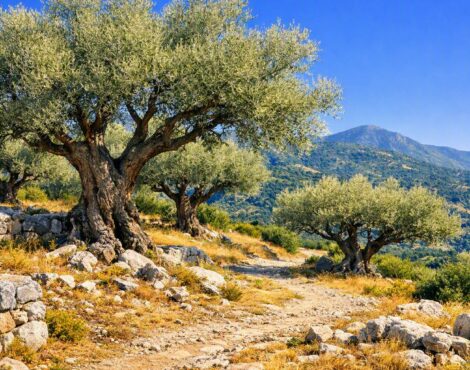
The olive dominates the agricultural landscape of Corfu so completely that the visitor who arrives in September and looks at the silver-green canopy covering the island’s hillsides might conclude that the vine has no significant role in the island’s agricultural story. The conclusion would be partly correct and partly misleading. The olive is indeed the defining agricultural feature of Corfu, the product of the Venetian incentivisation programme that transformed the island’s landscape over four centuries of deliberate planting. But the vine existed on Corfu before the Venetians arrived and has continued to exist alongside the olive through all the subsequent centuries of the island’s agricultural history, its production modest, its distribution largely local, and its connection to the island’s identity and its cuisine genuine and continuous.
September is the month when the vine asserts itself most directly in the Corfiot agricultural calendar. The grape harvest that takes place in the vineyards of the island’s interior and hillside areas through the September weeks is a small event by the standards of the major Greek wine-producing regions, but it is a real event, connecting the island’s contemporary wine culture to an ancient agricultural tradition that the olive’s dominance has never entirely displaced.
The Viticultural Heritage
Wine production on Corfu predates the Venetian period by many centuries. The ancient Corcyraeans, who established the island as one of the most prosperous colonial cities in the archaic Greek world, were wine producers and wine traders alongside their other commercial activities, and the viticulture that supplied both the local consumption and the export trade of the ancient city was a significant element of the island’s agricultural economy in the period before the olive’s dominance was established.
The Venetian decision to prioritise olive cultivation over all other forms of agriculture, backed by the financial incentive of the bounty system, reduced the role of viticulture in the Corfiot economy significantly but did not eliminate it. The vine, suited to the hillside terrain and the calcareous soils that the olive also favours, persisted in the island’s agricultural landscape through the centuries of Venetian administration and beyond, and the small vineyards that exist today in various locations across the island’s interior are the direct descendants of a viticultural tradition that has continued, in diminished form, through every chapter of the island’s agricultural history.
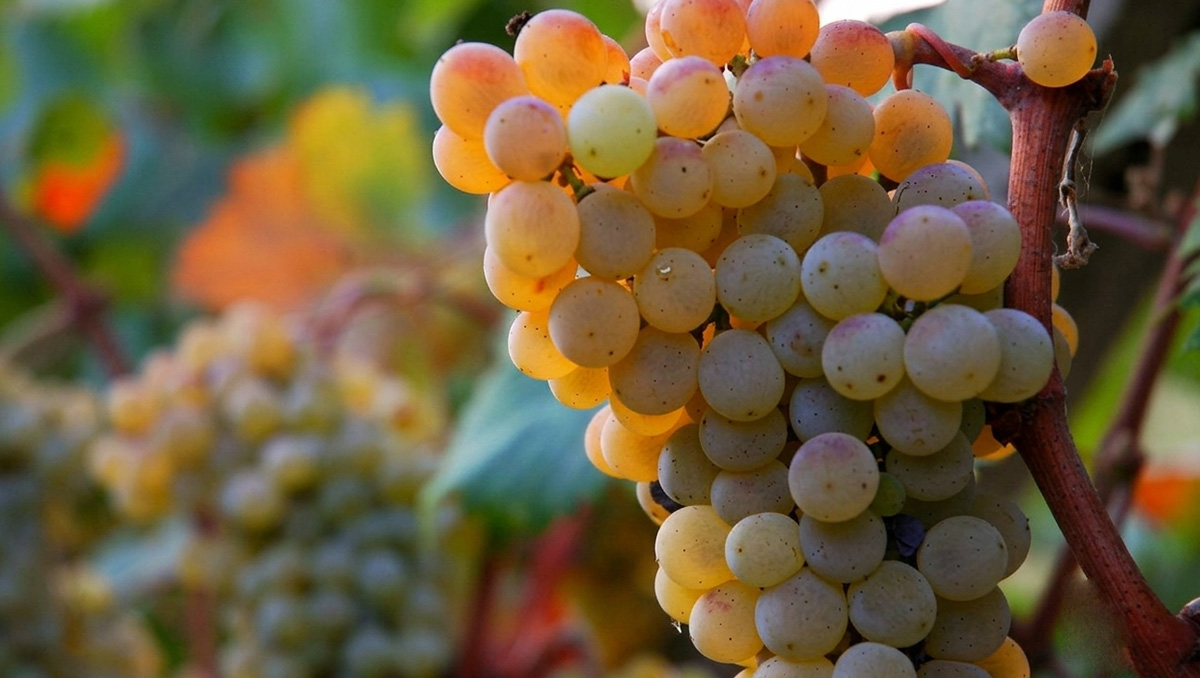
The grape varieties that these vineyards cultivate reflect this long history in their particular character. The Kakotrygis, the most distinctively Corfiot of the white varieties grown on the island, is a grape of considerable antiquity and specific local adaptation, its aromatic profile shaped by the particular combination of the Corfiot climate, the calcareous soils of the island’s hillside vineyards, and the centuries of selection that have produced a variety suited to these specific conditions rather than to the generalised requirements of a commercially oriented wine industry.
The September Harvest
The grape harvest of September in Corfu’s small vineyards is an event of genuine agricultural and cultural significance for the communities that produce it, and the visitor who encounters it during a September stay at Kapella Apartments discovers one of the most directly engaging expressions of the island’s living agricultural tradition available in the early autumn month.
The harvest at the smaller family vineyards follows the traditional cooperative pattern of agricultural work in Greek rural communities: the extended family and the immediate neighbours gathering at the vineyard in the early morning, before the September heat builds to its midday peak, to pick the grapes by hand from the vine rows in the manner that has characterised the harvest at sites like this for generations. The work is physical and rhythmic, the pickers moving through the vine rows with the particular combination of speed and care that experienced harvesters develop, the grape bunches filling the collection containers that are carried to the vineyard edge for transport to the press.
The community dimension of the harvest, the gathering of the people whose connection to the vineyard and to each other is expressed most directly in this annual collective work, gives the September grape harvest a social character that the individual and mechanised harvests of the larger commercial operations do not produce. The meal that follows the morning’s harvest at the vineyard, eaten in the shade of the vines or under the tree at the vineyard’s edge with the morning’s work completed and the afternoon still available, is the harvest meal of a community that has been ending its September mornings in this way for as long as anyone can remember.
The Kakotrygis: Corfu’s Own Grape
The Kakotrygis grape, whose name translates with the unflattering directness of Greek agricultural vocabulary as something approaching difficult harvest, earns its name through the thin skin and the juice-heavy interior that make the ripe fruit particularly susceptible to splitting and to the various forms of spoilage that wet conditions or rough handling introduce. It is a grape that rewards the careful harvester and the attentive winemaker, and the wine that its best expressions produce is a wine of specific and genuinely local character that no other variety grown on the island quite replicates.
The Kakotrygis wine at its finest has an aromatic profile that the island’s combination of the September harvest, the calcareous soil, and the Mediterranean climate produces in a form found nowhere outside the Ionian islands: floral and citrus notes alongside a mineral quality that the limestone soil contributes, and a freshness of acidity that makes the wine an ideal companion to the seafood that the island’s kitchen produces in such abundance and quality. It is not a wine of great complexity or of the kind of age-worthiness that the major Greek wine-producing regions achieve with their finest varieties. It is a wine of its place, expressing the specific character of the Corfiot terroir with the directness that local varieties in well-suited conditions always achieve and that the internationally recognised varieties, however accomplished in their best examples, rarely replicate with the same sense of geographical specificity.
Where to Find Corfiot Wine in September
The wines of Corfu’s small producers are available from several points of purchase during a September stay at Kapella Apartments, and the search for the finest local examples is itself a rewarding dimension of the early autumn exploration of the island’s food culture that September makes most fully available.
The village shops of the island’s interior, particularly in the agricultural areas of the northwest and the hillside communities of the Pantokrator slopes, stock the local wines of the surrounding producers alongside the olive oil and the cheeses and the dried goods that constitute the standard range of a Corfiot village shop. The owner of such a shop, who knows the local producers personally and whose recommendation reflects genuine knowledge of the current vintage rather than commercial convenience, is the most reliable guide to the finest local wine available at any given point in the September season.
The covered market in Corfu Town offers a wider range of local wines than the individual village shops, the market stallholders stocking the production of several island producers alongside the imported and commercial Greek wines that the tourist market also demands. The market wine purchase, guided by the stallholder’s recommendation and informed by the specific questions about variety and producer and vintage that the September visit to a local wine market makes possible, provides the bottles for the Kapella Apartments evening table that the island’s wine tradition is best represented by.
Wine at the Kapella Apartments Table
The local wine of Corfu at the Kapella Apartments outdoor table in September, accompanying the dinner prepared from the morning’s market harvest of September tomatoes and fresh fish and the local cheeses that the covered market’s dairy section provides, is the wine in its most natural and most completely appropriate context. The Kakotrygis white with the grilled fish from the morning’s catch, dressed with the island’s olive oil and accompanied by the September tomato salad that requires nothing more than the oil and the local salt to reach its finest expression: this is the dinner that the September agricultural calendar of Corfu provides the ingredients for and that the Kapella Apartments outdoor table, warm in the September evening and fragrant with the garden’s early autumn herbs, provides the setting for.
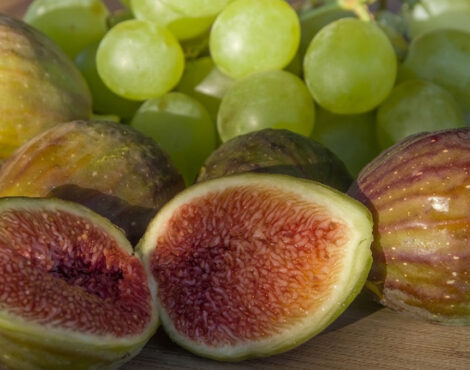
The September harvest in Corfu, from the grape that goes to press in the first weeks of the month to the fig that has been reaching its peak since late August to the olive that is accumulating its oil in the developing fruit visible on the ancient trees surrounding the property, is the harvest of an island that has been growing food in this landscape for three thousand years. The dinner at the Kapella Apartments table in September, built from the products of this harvest, is the most direct and most personally rewarding engagement with that tradition available to the guest who chooses the early autumn month for their Ionian stay.