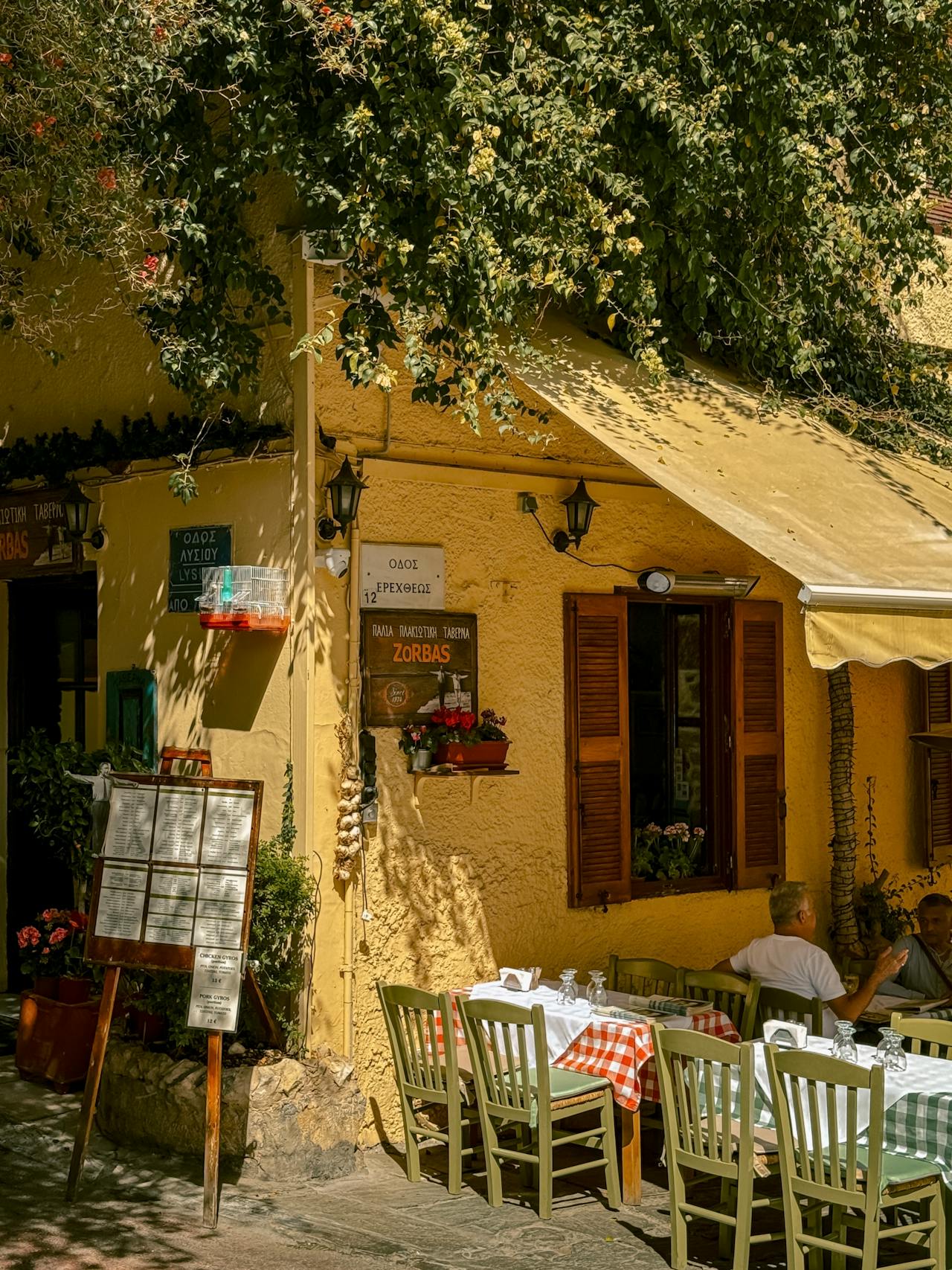
Eating well in Corfu is not difficult. The island has been producing food of exceptional quality for centuries, its cuisine shaped by the same layered cultural inheritance that gave it its architecture and its music: Venetian techniques applied to Greek ingredients in a climate that makes both the growing and the cooking and the eating of food a matter of daily pleasure rather than mere sustenance.
In June, eating well in Corfu acquires an additional quality. The tavernas are fully open and operating with the focused attention of a season just hitting its stride. The produce arriving from the island’s farms and fishing boats reflects the best of early summer. The tables in the village squares and on the seafront terraces are occupied but not overwhelmed. The owners and cooks and waiters are still in the phase of the season when the work is energising rather than exhausting. June dining in Corfu, in short, catches the island’s food culture at its most naturally itself.
The Corfiot Kitchen
Before discussing where to eat, it is worth understanding what distinguishes Corfiot cooking from the Greek food that visitors may have encountered elsewhere. The distinction is real and significant, rooted in the four centuries of Venetian administration that gave Corfu its architecture and its musical tradition and, equally importantly, its approach to the kitchen.
Venetian cooking brought to Corfu a set of techniques and flavour combinations that had no equivalent in the mainland Greek culinary tradition. The slow braising of meat in wine and aromatics, the use of pasta alongside rice and bread as a carbohydrate base, the integration of spices that reached Venice through its eastern trade routes, all of these elements entered the Corfiot kitchen during the centuries of Venetian rule and became so thoroughly absorbed into local practice that they are now regarded as distinctively Corfiot rather than as imports.
The result is a cuisine that shares the ingredients of Greek cooking but applies them in ways that produce dishes quite different from those found on the mainland or the Aegean islands. Ordering food in Corfu requires a willingness to go beyond the familiar Greek menu standards and explore the dishes that the island has made its own.
Sofrito: The Signature Dish
Sofrito is the dish that every visitor to Corfu should eat at least once and most eat several times. Veal escalopes, or sometimes beef, cooked slowly in a sauce of white wine, garlic, white pepper, and parsley until the meat is tender and the sauce has reduced to a consistency that is neither thick nor thin but exactly right, sofrito is a dish of considerable subtlety that rewards a kitchen willing to give it the time and attention it requires.
The name is Venetian, a reminder of the dish’s origins in the culinary tradition that the Republic brought to the island. The execution is entirely Corfiot, the balance of garlic and parsley and wine adjusted over generations to a formula that every serious Corfiot restaurant has its own version of and that every Corfiot family believes its own recipe surpasses. Ordering sofrito in a good Corfiot taverna is one of the most reliable ways to eat exceptionally well on the island, and the version that a kitchen produces is often the most direct indication of the care and skill that the establishment brings to its cooking generally.
Pastitsada: The Celebration Dish
If sofrito is the everyday expression of Corfiot cooking at its best, pastitsada is its festive counterpart. The dish, which combines slow-braised meat, traditionally cockerel though beef and veal versions are common, in a richly spiced tomato sauce served over thick pasta, carries the particular depth of flavour that long cooking and the generous use of spice produce in combination.
The spice blend used in pastitsada reflects the Venetian spice trade more directly than almost any other Corfiot dish: cinnamon, allspice, cloves, and bay leaves combine with the tomato and the braising liquid to create a sauce of extraordinary complexity that is simultaneously warm and savoury and faintly sweet in the way that the best spiced meat dishes always are. The pasta beneath the meat, typically the thick tubular variety called hilopites or the similar bucatini, absorbs the sauce and becomes as much a vehicle for flavour as the meat itself.
Pastitsada appears on the menus of the better Corfiot restaurants throughout the season and is worth seeking out specifically, as the commitment required to produce it properly means that only kitchens genuinely engaged with the Corfiot culinary tradition tend to include it.
Bourdeto: The Fisherman’s Stew
The third pillar of the Corfiot culinary canon is bourdeto, the spiced fish stew that is the island’s most distinctively local seafood dish. The preparation is simple in its outline: firm-fleshed fish, traditionally scorpionfish or grouper though other varieties work well, braised in a sauce of onion, tomato, and red pepper that gives the dish its characteristic heat and colour.
The heat in bourdeto is not the fierce capsicum heat of chilli-based cooking but the rounder, more persistent warmth of sweet red pepper used generously and cooked long, a flavour that builds slowly and lingers pleasantly rather than asserting itself immediately. The fish, which must be fresh and of good quality for the dish to succeed, holds its texture within the sauce and takes on the flavour of the braising liquid without losing its own character.
Ordering bourdeto in a taverna close to the sea, where the fish arrived that morning, is one of the most characteristically Corfiot dining experiences available, and the combination of the dish’s warmth and depth with the cool of a June evening on a seafront terrace is one of those straightforward pleasures that the island consistently and reliably delivers.
Where to Eat: Village Tavernas of the Interior
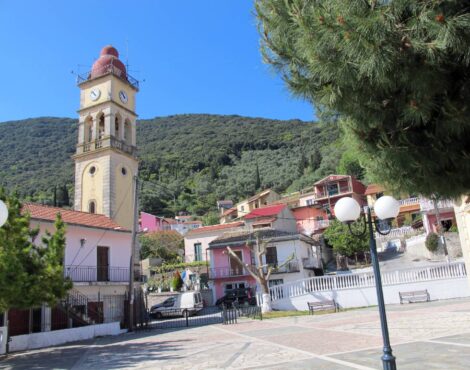
The villages of Corfu’s interior contain some of the most rewarding restaurants on the island, their menus reflecting the traditional Corfiot kitchen with a directness and authenticity that the more touristically oriented coastal establishments do not always maintain. Finding these restaurants requires some willingness to leave the coastal roads and drive into the olive country of the interior, but the effort is consistently repaid.
The village taverna at its best is a family operation, the kitchen managed by the same person who sources the ingredients and whose family has been cooking these dishes in this village for generations. The menu is short and changes with the season. The olive oil is local. The wine is often from a producer known personally to the owner. The service is attentive in the way of someone who takes genuine pride in what they are offering rather than managing a volume of tables.
The Seafront Taverna: Fish and the Sea
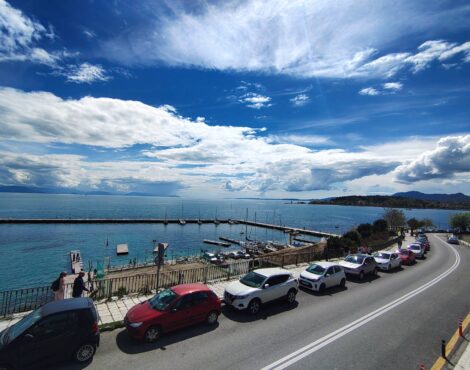
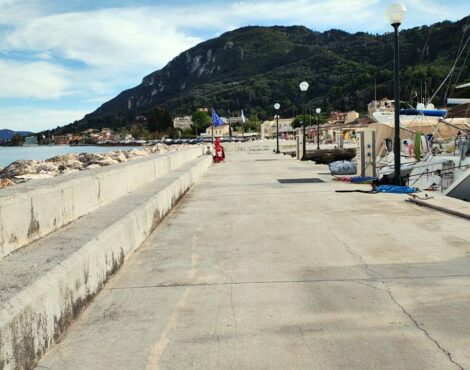
The northeast coast of Corfu, with its fishing villages and small harbours, provides the setting for some of the finest seafood dining on the island. The tavernas of Kassiopi, Agios Stefanos, and the smaller villages along this coast receive fish from local boats and prepare it with the simplicity that genuinely fresh seafood requires and rewards: grilled over charcoal, dressed with local olive oil and lemon, served at a table from which the sea that produced it is directly visible.
In June, these seafront tavernas are operating at a pace that combines full preparation for the season with the unhurried attentiveness of early summer. Tables are available, the owners are present, and the combination of excellent fish, an open-air setting, and the particular quality of a June evening on the Corfiot coast produces dining experiences that guests at Villa Kapella return from with the specific kind of satisfaction that the best meals always produce: the immediate and completely sincere wish to return the following evening.
Kumquat: The Island’s Signature Finish
Any account of Corfu dining must end with kumquat, the small citrus fruit that grows in significant quantities almost nowhere in Greece outside Corfu and that has been transformed by the island’s producers into a liqueur, a spoon sweet, and a range of preserves that appear at the conclusion of every serious Corfiot meal.
Kumquat liqueur, offered as a digestivo at the end of dinner in virtually every restaurant on the island, is sweet and citrus-forward with a warmth that makes it the ideal conclusion to a long meal. It is not a drink of great complexity, but it is entirely itself, entirely of this place, and the ritual of the small glass appearing at the end of dinner is one of those simple, repeated pleasures that accumulate over the course of a week at Villa Kapella into something that belongs to the memory of the island as completely as the colour of the sea or the smell of the olive groves in the morning heat.